
“Imperfection remains the most beautiful form of perfection”
- Henriette HellsternFreedom, Imperfection and Subtle Jabs at Narrow-Mindedness. Meet visual artist Henriette Hellstern and discover what the entire artSIStra network was most eager to ask in this special collective interview.
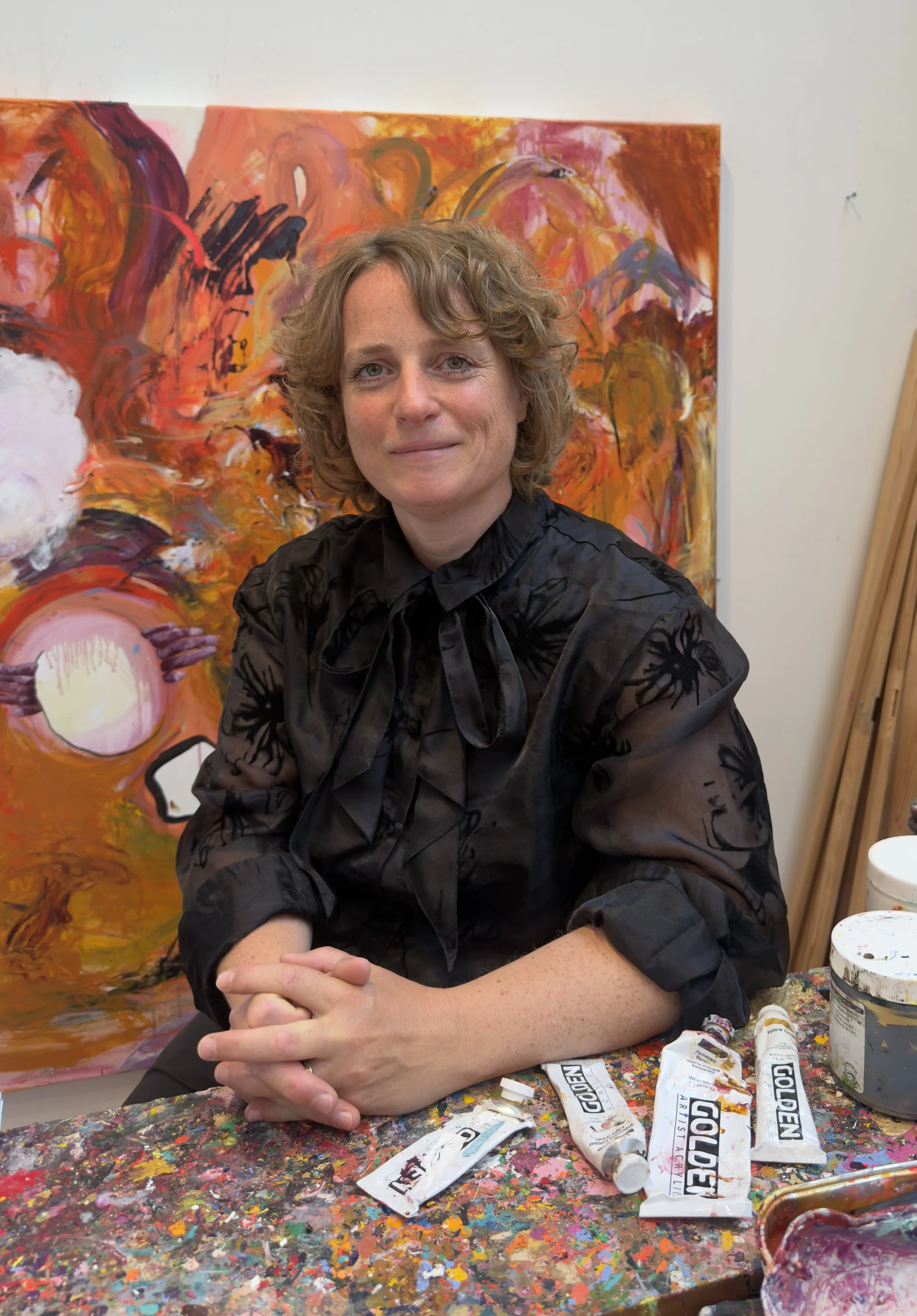
artSIStra Interview // Lene Winther, Tina Menore, Freja Niemann-Lundrup, Maria Engholm, Nina K. Ekman, Lolita Pelegrime, Bolatta Silis-Høegh, Gitte Svendsen and Mia-Nelle Drøschler.
Woven together by Henriette Hellstern // June 26. 2026 // Amager
This time, there is no single interviewer. Instead, the entire community of artSIStra´s has supplied the questions. Following a hot, sun-drenched afternoon in my studio on Amager, each question was folded into an old summer hat. Now they are drawn, one by one.
I've always been fascinated by transitions. They are everywhere, even when we convince ourselves we've finally landed. They simply feel a little louder these days, now that I've entered what language, rather unimaginatively, insists on calling menopause. Honestly, couldn't we promote it to the Guru Era instead? It would be kinder to both women and language.
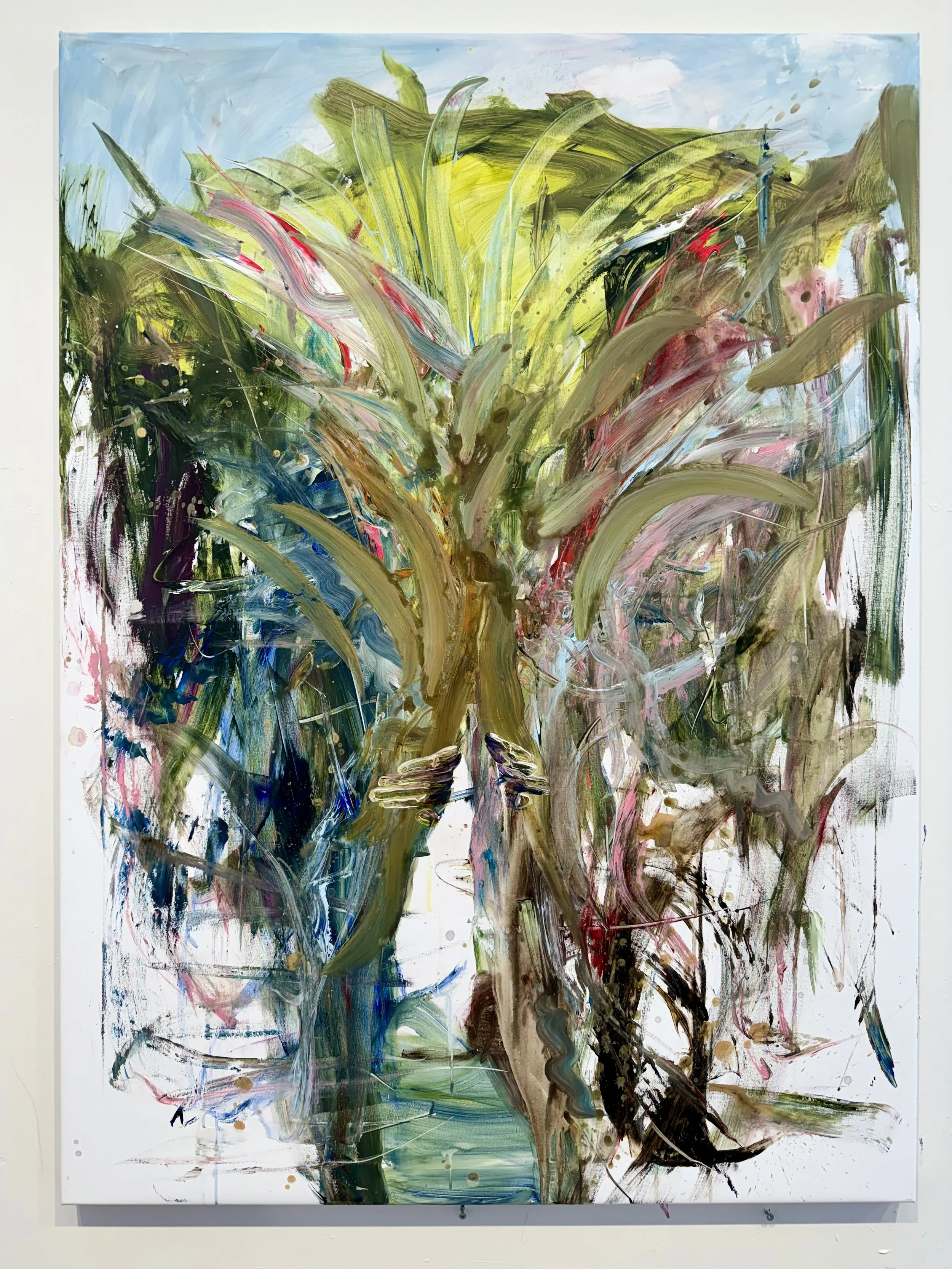
You may enter II, by Henriette Hellstern, 2026
Overture & Rituals
"What is a painting?"
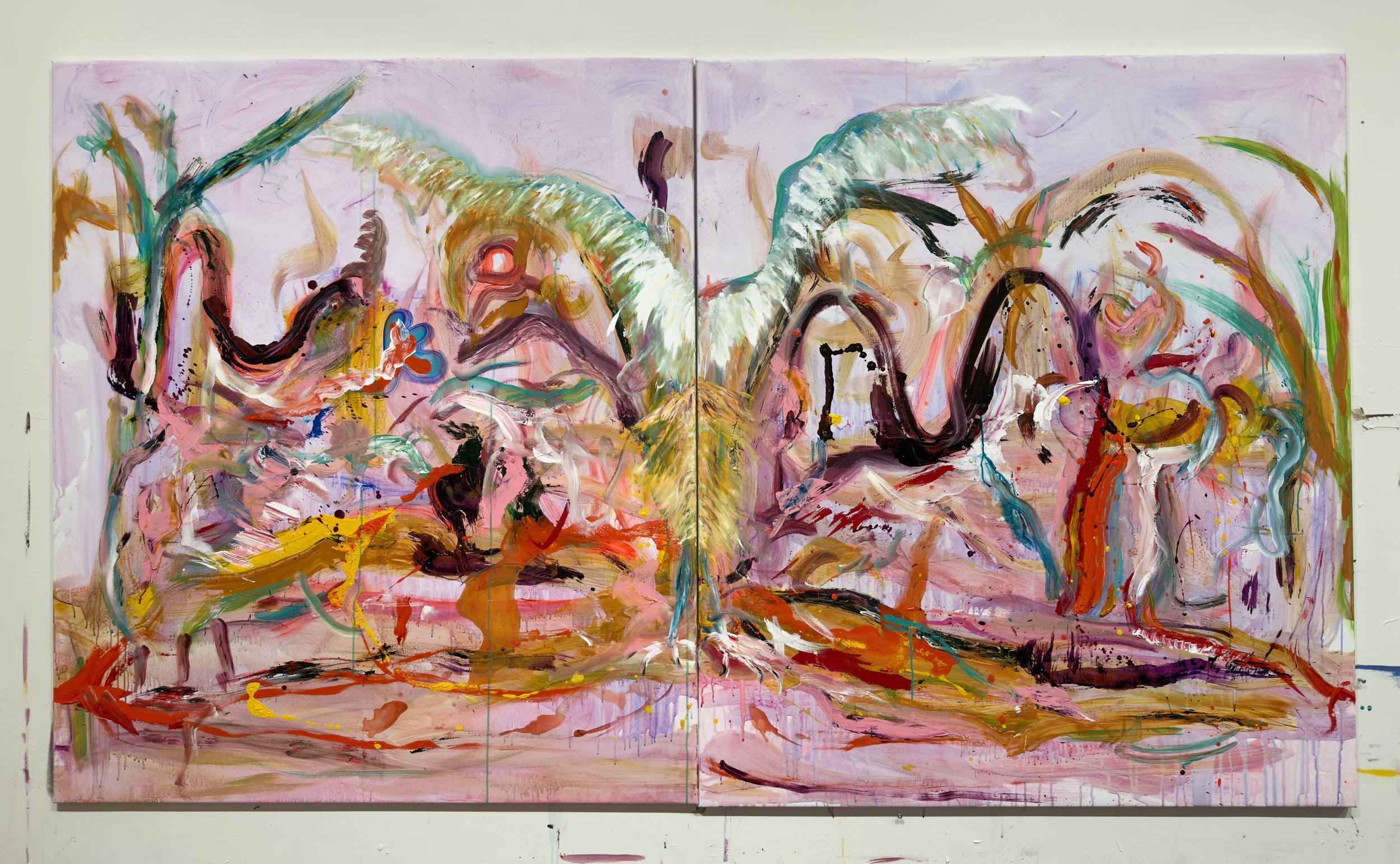
I believe a painting is both a channel and a mirror. A place where something deeply internal leaves the body and becomes colour, form, and force. I often describe my work as abject art, though, to me, it is really the transformation of emotion into images that resonate within another human being.
Painting is also my most vulnerable voice. It is where I can give shape to life's cracks and quirks as well as society's deeper ruptures. I genuinely feel a responsibility to create work that matters, work that speaks to the world we inhabit. And perhaps most of all, I cherish the freedom of making my own rules, of reinventing the wheel over and over again, simply because I can.
"Do you have any rituals before entering your studio, before you begin working, or during the process itself, music, tidying up, or anything else?"
Before I begin, I often have a quiet conversation with myself. Not because I expect definitive answers, but because I need to check in. How does my body feel today? Where is my energy? My paintings are deeply intuitive, and if I begin from an inner frequency that is slightly out of tune, the entire work may end up resisting me. But when body, mind, and sensation suddenly begin playing the same melody, a painting can emerge almost within a single breath.
If I'm working towards a particular exhibition or exploring a specific theme, I usually find a musical landscape that belongs to it and let it play on repeat. Again and again, until the music seeps into the painting itself. Long after the work has left the studio and found its place on a gallery wall, I can still hear those notes echoing through it.
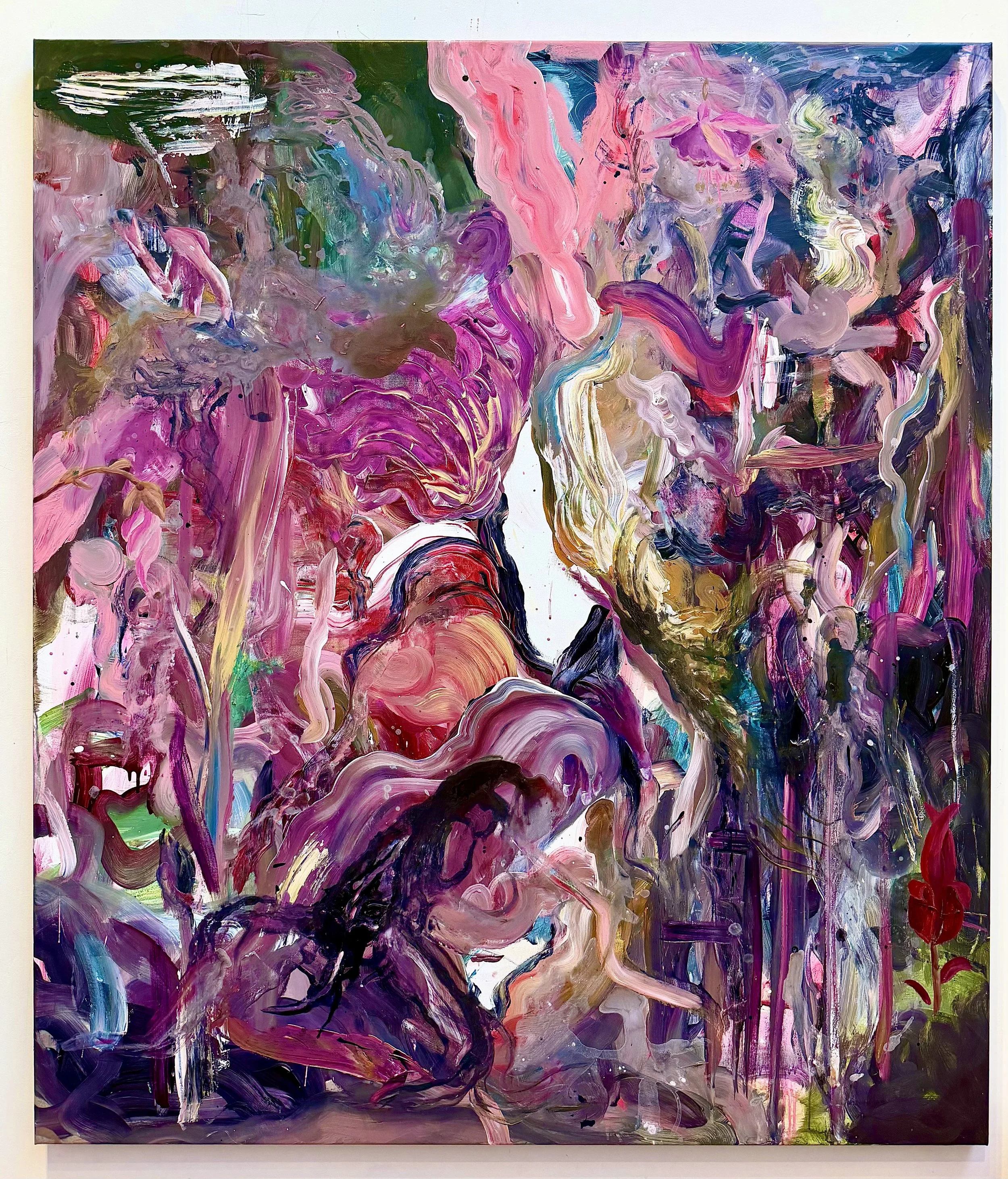
You may enter IV, by Henriette Hellstern, 2026
Processes & Intuition
"Do you work best at full speed, or do you prefer to build a painting gradually as each layer dries?"
Both. Works that begin with sketches often call for patience, contemplation, and layers accumulated over time. Intuition-led paintings demand the exact opposite. In those moments, there is no room for polite brushstrokes. Everything happens at full force from the very first second.
"Do you always begin with a fixed idea?"
Sometimes it begins with a theme. Other times, with an emotion that refuses to be ignored. Right now, the most challenging, and the most exhilarating, part of my practice is standing before a blank canvas and allowing whatever wants to emerge to arrive without resistance.
"How do you know when an abstract painting is finished? Is it simply intuition?"
The short answer is yes.
The longer answer is that I've learned to spend more time simply looking, to sit with a painting rather than rushing to resolve it. If that intuitive sensation remains, I know I can let it go. If it disappears, I either paint over the work or abandon it altogether. I never exhibit or sell anything that I don't wholeheartedly believe in.
"When does a work feel truly alive or emotionally present to you, whether it's your own or someone else's?"
When I can sense the human being behind it. The vulnerability. Not the perfection.
My own paintings come alive when I manage to preserve that presence from the first gesture to the very last.
"Can you remember a moment when someone truly understood your work? What made that possible?"
Yes. Thankfully, more than once.
There is something extraordinary about the moment another person doesn't simply look at a painting, but allows it to become a mirror. That is where the connection between artist and viewer begins.
That possibility is always there. But it asks something of us. It asks that we look beyond the image itself, that we allow ourselves to truly feel.
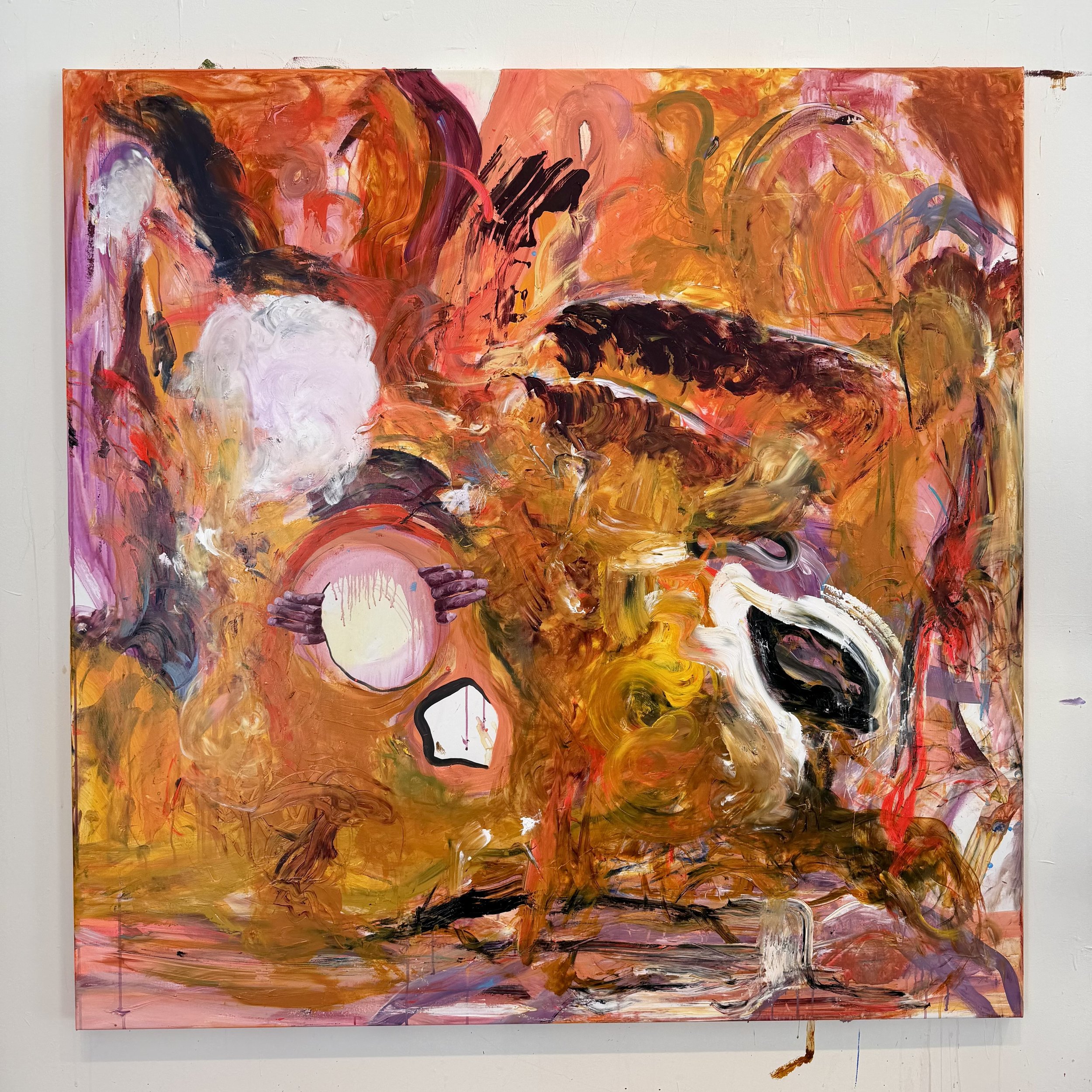
You may enter V, by Henriette Hellstern, 2026
Anything but Beige
"What does your palette represent to you?"
Life. Contrast. Movement.
A visitor to my studio recently remarked, "What you make feels very un-Danish." I took it as a compliment.
My colours and compositions probably owe more to German and American Expressionism than to the muted comfort of Nordic earth tones. I have yet to fall hopelessly in love with beige, and I suspect I never will.
"What does the scale of your canvases mean to you?"
Large canvases invite the body to think less and move more. My arm lets go of control, my pulse quickens, and my entire body becomes a collaborator in the making of the work.
Action painting on a canvas the size of a postage stamp seems, quite honestly, a touch optimistic.
"When do you feel most free while painting?"
At the beginning. And somewhere in the middle.
Towards the end, decisions begin to take over.
But when the process truly unfolds the way it should, I lose all awareness of time, place, and even my own body. It's the same state I seek through meditation, or the feeling of an unforgettable dinner party, when the conversation flows so effortlessly that no one notices the night quietly turning into morning.
"What did you think when some of your paintings were rejected from an exhibition because of their subject matter, even though they appeared light and inviting?"
I think the art world occasionally lacks courage.
The paintings dealt with hate crimes against LGBTQ+ people. Their stories carried far more weight than their colours initially revealed. But art doesn't have to be easy to sell in order to be necessary.
I would have painted them anyway.
Meaningful change has always come before commercial success.
"How does a single figurative element enrich an abstract painting?"
It behaves like a mischievous little troublemaker.
A subtle disruption.
Perhaps an art historical version of Where's Wally?
Something that nudges the balance ever so slightly and invites the viewer to look one more time.
"How can energy move between the figurative and the abstract?"
Because I do.
I move between stillness and wild defiance. Between the introverted and the extroverted. Between the desire to belong and the irresistible urge to raise my middle finger towards everything.
"Your practice has evolved from figurative painting towards a more dissolved, abstract language. What drew you in that direction? What are you exploring?"
I went through a period marked by closed doors and countless rejections.
Eventually, the past came knocking and reminded me why I had started painting in the first place: because it was necessary. Not strategic.
That's why I often paint with my hands now. Bare-handed. With paint between my fingers. Playfully. Curiously.
As though the body knows something the mind only comes to understand afterwards.
Transitions & Raised Middle Fingers
"How do the changing seasons affect you?"
Light is probably my greatest collaborator. It is both a working tool and a source of mental energy.
The trees just outside my studio door quietly remind me of the passing seasons whenever I've stopped noticing them, usually because I've left the house wearing entirely the wrong clothes. The birds matter just as much. I feed them (a lot) whenever they visit the garden, and every summer a lively colony of different species settles outside my window. My heart sinks a little each autumn when they lift off and begin their journey south.
"You mentioned transitions and how they have become part of your work. Could you tell us more about that?"
I experience life as a continuum. We are always becoming; always in motion.
The middle path is probably the healthiest to walk, yet I possess a remarkable talent for landing at the extremes. Perhaps that's simply an occupational hazard of being an artist.
I've always been fascinated by transitions. They are everywhere, even when we convince ourselves we've finally landed. They simply feel a little louder these days, now that I've entered what language, rather unimaginatively, insists on calling menopause. Honestly, couldn't we promote it to the Guru Era instead? It would be kinder to both women and language.
In the eye of the hurricane I, by Henriette Hellstern, 2026
The Crystal Ball Speaks
"Where do you feel your practice is heading in the coming years?"
MoMA, obviously. It's about time they had their turn.
Beyond that, I simply hope to find myself wherever I can continue to grow. I'm still chasing the next painting, the one that vibrates a little deeper, dares a little more, and feels just a little more alive than the last.
"What would you say to your younger self?"
First, I would give her a long embrace.
Then I would tell her that all the unconventional ideas, the homemade instruments, the poems, the song lyrics, the drawings of fleeting clouds drifting above the bay, and the broad wingspan of the Eurasian Sparrowhawk were never detours.
They were the beginning.
And then I would simply say:
Keep going.
Believe in love.
Never make yourself smaller to fit someone else's expectations.
Sometimes, being wrong is the only way to be right.
Imperfection remains the most beautiful form of perfection.
Frihed, uperfekthed og subtile stikpiller til snæversynet, mød billedkunstner Henriette Hellstern og læs hvad hele artSIStra netværket allerhelst ville have svar på i dette særlige gruppeinterview.
artSIStra interview // Lene Winther, Tina Menore, Freja Niemann-Lundrup, Maria Engholm, Nina K. Ekman, Lolita Pelegrime, Bolatta Silis-Høegh, Gitte Svendsen og Mia-Nelle Drøschler. Sammenflettet af Henriette Hellstern // Jun. 26. 2026 // Amager
Denne gang er der ikke én interviewer, men et helt kunstnerfællesskab, der har stillet spørgsmålene. Efter en sommerhed gennemgang i atelieret på Amager blev spørgsmålene lagt i en gammel sommerhat, og nu trækkes de frem ét ad gangen.
Overgange har altid optaget mig. De findes overalt, også når vi bilder os ind, at vi er landet. De føles blot en smule mere højlydte nu, hvor jeg er trådt ind i det, sproget så uopfindsomt kalder overgangsalderen. Helt ærligt, kunne vi ikke opgradere den til guruæraen. Det ville klæde både sproget og kvinderne.
Ouverture og ritualer
"Hvad er et maleri?"
Jeg tror, et maleri både er en kanal og et spejl. Et sted, hvor noget indre kan forlade kroppen og blive til farve, form og kraft. Jeg plejer at kalde det abjekt kunst, som i virkeligheden er en transformation af følelser til billeder, der vækker genklang hos et andet menneske.
Maleriet er samtidig mit mest hudløse talerør. Her kan jeg give form til både de små sprækker og de store samfundsmæssige skævheder. Jeg føler faktisk et ansvar for at skabe vedkommende kunst. Og så elsker jeg, at jeg kan lave mine egne regler, og opfinde den dybe tallerken uendelige gange.
"Er der et ritual, før du går ind i dit atelier, før du starter med at arbejde eller undervejs i processen, f.eks. gennem musik, oprydning etc.?"
Jeg har ofte en indre dialog med mig selv, før jeg går i gang. Ikke fordi jeg forventer at få de rigtige svar, men fordi jeg lige skal tjekke ind: Hvordan har kroppen det i dag? Hvordan er energien? Mine værker er dybt intuitive, og begynder jeg på en skæv indre frekvens, kan hele maleriet ende med at protestere. Omvendt, når krop, sind og sansninger pludselig spiller samme melodi, kan et værk opstå næsten i ét åndedrag.
Hvis jeg arbejder mod en bestemt udstilling eller tematik, finder jeg ofte en passende type musik og lader genren køre på repeat. Så mange gange, at musikken flytter ind i maleriet. Når værket senere hænger på en væg, kan jeg stadig høre tonerne.
Processer og fornemmelser
"Arbejder du bedst med fuld fart på eller bygger du det hellere op i takt med tørringsprocessen?"
Begge dele. Skitsebaserende værker kræver ofte tålmodighed og lag. Intuitionsbårede værker kræver det stik modsatte. Så er der ikke tid til høflige penselstrøg. Så bliver det fuld smadder fra første sekund.
"Starter du altid med en fast idé?"
Nogle gange begynder det med et tema. Andre gange med en følelse, der insisterer på at blive taget alvorligt. Det mest udfordrende og spændende pt. er at stille sig foran lærredet og åbne op for hvad end der kommer.
"Hvornår ved du, at et abstrakt værk er færdigt, bruger du mavefornemmelsen?"
Det korte svar er “ja”. Men jeg øver mig også i at bruge mere tid på at betragte, og bare være sammen med værket. Vedbliver mavefornemmelsen, kan jeg gå videre, forsvinder den, kasserer jeg værket eller maler det om. Jeg udstiller eller sælger aldrig noget jeg er utilfreds med.
"Hvornår føles et værk levende eller følelsesmæssigt nærværende for dig, enten i din egen praksis eller i andres?"
Når jeg kan mærke mennesket bag værket. Hudløsheden. Ikke perfektionen. Mine egne værker lever, når det lykkes mig at bevare nærværet hele vejen igennem processen.
"Kan du huske et øjeblik, hvor nogen virkelig forstod dit arbejde, hvad gjorde det muligt?"
Ja. Heldigvis flere. Det er et særligt øjeblik, når et menneske ikke bare ser et værk, men bruger det som spejl. Der opstår forbindelsen mellem kunstner og beskuer. Den mulighed findes altid. Men den kræver, at vi tør se lidt længere end motivet, at vi virkelig tør mærke efter.
Alt andet end beige
"Hvad repræsenterer din palette for dig?"
Liv. Kontraster. Bevægelse. En gæst i atelieret sagde for nylig: "Det er meget ikke-dansk, det du laver." Jeg tog det som et kompliment. Mine farver og kompositioner læner sig måske mere mod tysk og amerikansk ekspressionisme end nordisk jordfarvehygge. Jeg har i hvert fald stadig til gode at forelske mig hovedkulds i beige.
"Hvad betyder størrelsen af dine lærreder?"
Store lærreder får kroppen til at tænke mindre og bevæge sig mere. Armen slipper kontrollen, pulsen kommer op, og hele kroppen bliver medskaber. Action painting på et lærred på størrelse med et frimærke virker ærlig talt en smule optimistisk.
"Hvornår er du mest fri i maleriet?"
I begyndelsen. Og midtvejs. Mod slutningen overtager beslutningerne. Men når processen virkelig lykkes, glemmer jeg både tid, sted og krop. Det er den samme tilstand, min meditation handler om, eller den følelse, når et middagsselskab bliver så godt, at ingen opdager, at natten er blevet til morgen.
Overgange og fuckfingre
"Hvordan påvirker skiftende sæsoner dig?"
Lyset er nok min største samarbejdspartner. Det er både et arbejdsredskab og et mentalt batteri. Træernes cyklus udenfor atelierdøren, minder mig om årstidernes skift når jeg har glemt dem, og er kommet af sted i for lidt eller for meget tøj. Også fuglene betyder en hel del for mig, jeg stopfordre dem når de gæster haven, så der bor altid en hel koloni af forskellige arter uden for vinduet hele sommeren. Mit hjerte synker altid lidt, når de flyver sydpå igen.
"Du snakkede om overgange, og at du bruger det i dit arbejde nu, kan du fortælle mere om det?"
Jeg oplever livet som et kontinuum. Vi er altid på vej. Midten er det sundeste sted at opholde sig, men jeg har en bemærkelsesværdig evne til at lande ude i yderpolerne. Måske er det et kunstnerisk grundvilkår.
Overgange har altid optaget mig. De findes overalt, også når vi bilder os ind, at vi er landet. De føles blot en smule mere højlydte nu, hvor jeg er trådt ind i det, sproget så uopfindsomt kalder overgangsalderen. Helt ærligt, kunne vi ikke opgradere den til guruæraen. Det ville klæde både sproget og kvinderne.
"Hvad tænker du om, at dine værker blev valgt fra til en udstilling pga. tematikken, når udtrykket var indbydende og let?"
Jeg tænker, at kunstverdenen indimellem mangler mod. Værkerne handlede om hatecrime mod lgbtq+ mennesker. Historien var tungere end farverne afslørede. Men kunsten skal ikke nødvendigvis være nem at sælge for at være nødvendig. Jeg ville male dem alligevel. Udviklingen kommer altid før det kommercielle.
"Hvordan beriger et enkelt figurativt element et abstrakt billede?"
Det opfører sig som en lille drillepind. En diskret ballademager. Måske en kunsthistorisk udgave af Find Holger. Noget, der lige tipper balancen og inviterer beskueren til at kigge én gang til.
"Hvordan kan energien vandre mellem det figurative og det abstrakte?"
Fordi jeg selv gør det. Jeg vandrer mellem ro og fandenivoldskhed. Mellem det introverte og det ekstroverte. Mellem trangen til at passe ind og lysten til at give fuckfinger til det hele.
"Din transformation fra det figurative maleri til nu, det opløste, hvad trak dig i den retning, hvad undersøger du?"
Jeg gik gennem en periode med mange lukkede døre og nej'er. Til sidst bankede fortiden på og mindede mig om, hvorfor jeg overhovedet begyndte at male: fordi det var nødvendigt. Ikke strategisk. Derfor maler jeg i dag ofte med hænderne. Uden handsker. Med maling mellem fingrene. Legende. Nysgerrigt. Som om kroppen ved noget, hovedet først opdager bagefter.
Krystalkuglen taler
"Hvor føler du, at din praksis bevæger sig hen de kommende år?"
MoMA, selvfølgelig. Det må da snart være deres tur. Ellers bare et sted, hvor jeg fortsat kan udvikle mig. Jeg jagter stadig det næste værk, dét, der vibrerer en anelse mere, tør lidt mere og lever lidt stærkere end det forrige.
"Hvad vil du sige til den yngre Henriette?"
Først ville jeg give hende et langt kram. Så ville jeg fortælle hende, at alle de skæve idéer, de hjemmebyggede instrumenter, digtene, sangteksterne, tegningerne af de flygtige skyer over bugten og Spurvehøgens vingefang, ikke var omveje. De var begyndelsen.
Og så ville jeg sige:
Bliv ved.
Tro på kærligheden.
Lad være med at gøre dig mindre.
Forkert er nogle gange det eneste rigtige.
Og uperfekt er stadig den smukkeste form for perfekt.