
“I may use everything, I may do everything”
- Gitte SvendsenAuthentic. Sensuous. Infinitely releasing.
Meet the visual artist Gitte Svendsen, and let yourself be enveloped by artworks where the city’s underside breathes, glitters, and speaks with you.
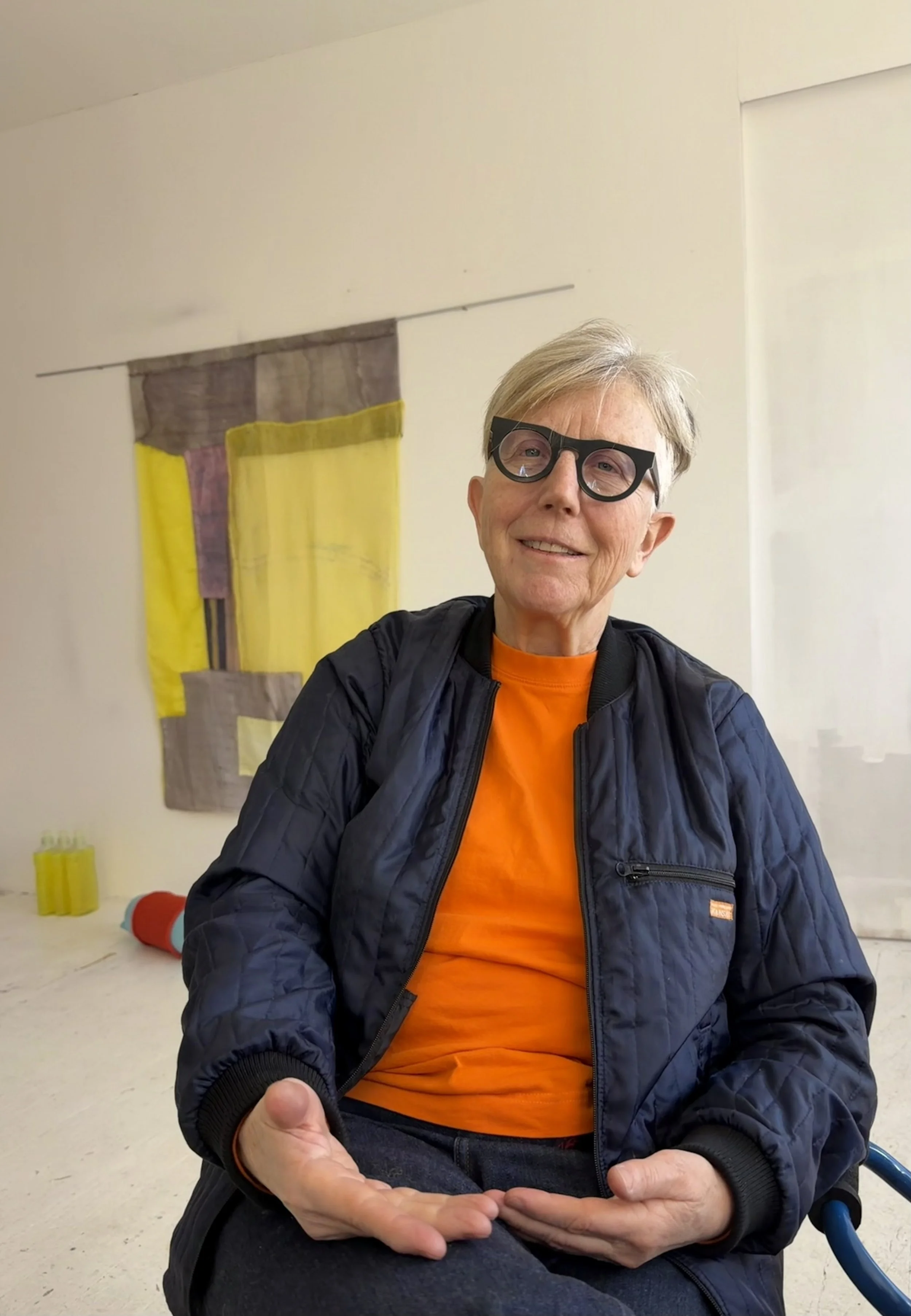
“If I could take only one thing with me to a desert island, it would be my orange clamp,” she says. As if it were a lifeline. As if it were a memory. In Svendsen’s hands nothing is neutral. Transparent plastic cans filled with yellow cleaning liquid, transported all the way from The Hague, a black glasses-cleaning cloth, fished from the pocket and tossed down in front of an artwork in the middle of a conversation about whether the piece is finished. Things carry weight. They carry will.
“Is that the trash bin?” I ask, just to be sure, before dropping my handkerchief down among yarn remnants and scraps of paper in a beautiful gleaming purple metal painter’s bucket.
“Yes, yes, you can use that, I’m not using it right now,” the artist laughs, warmly and generously.
I have landed in the middle of a gigantic installation or rather Gitte Svendsen studio in Nørrebro. Wherever I stand or sit, I am constantly an element within the artist’s works. From floor to ceiling I am bombarded with impressions, while one beautiful object after another winds through the room and embraces me in stormy contrast colours. Svendsen is a child of the city. Valby in the body, Østerbro in memory, Copenhagen as home. She graduated in 2017 from the Royal Academy of Art in The Hague, a tour de force of artistic unfolding, an explosion of photography, video, installation, and tufting.
artSIStra interview // Henriette Hellstern // Feb. 27. 2026 // Nørrebro // Denmark
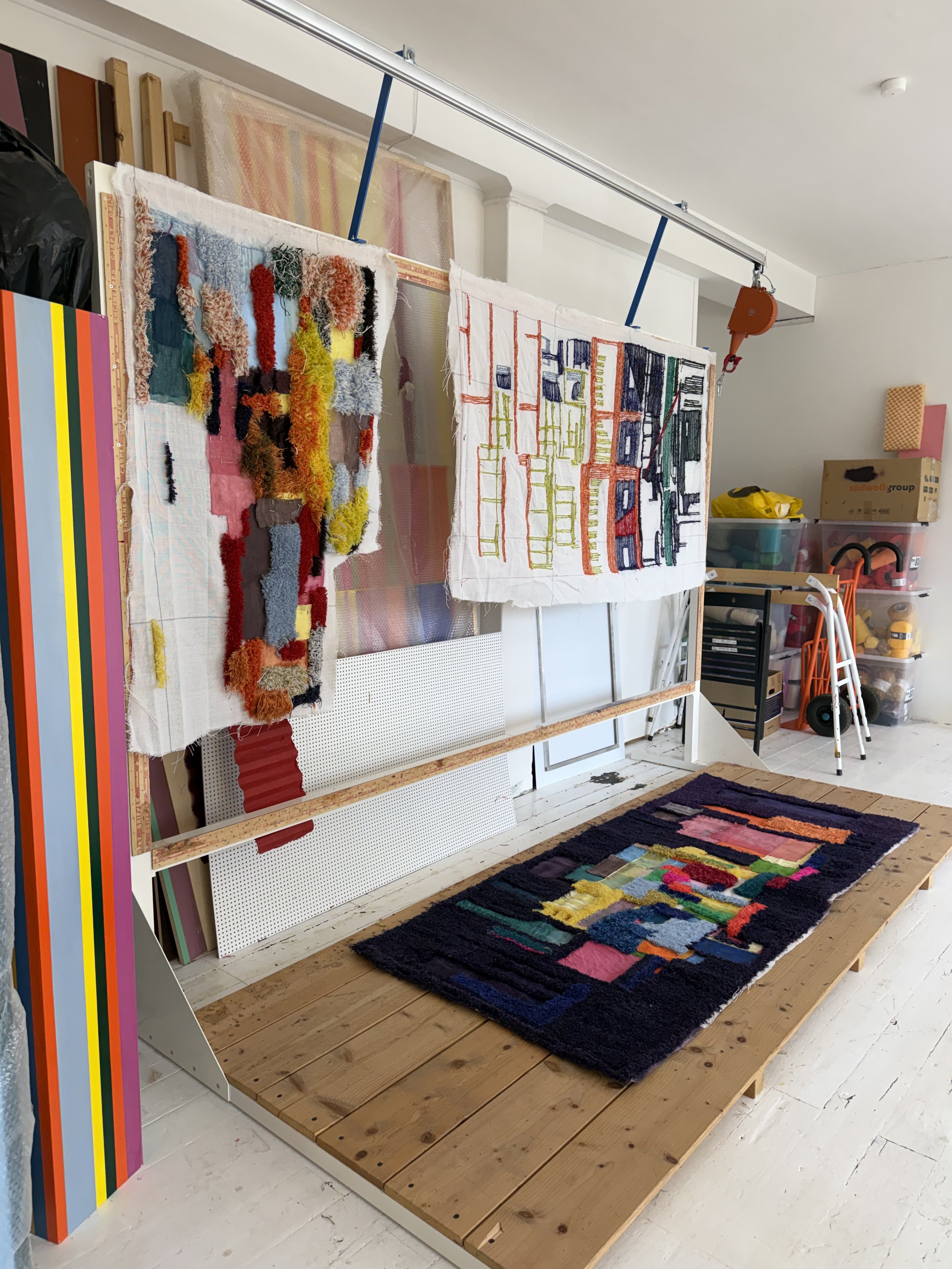
Tuft in process, 2026
From building materials to new foundations
“I emptied the container outside my rented workshop and locked myself in for fourteen days, it was a celebration,” Svendsen elaborates, with a particular gleaming light in her eyes. Those two weeks during her academy years proved decisive. An eternal treasure hunt was set in motion, after what the rest of us leave behind in construction processes or clean-ups. The cornerstone of the artistic practice was cast: combined with a fascination for mass-produced factory goods from the East, assembled into new universes.
Over time the large installations have been joined by tufting. Metre-long, furry objects are created in the air on the tufting machine. Yet the relationship between material and artist is marked by a kind of love–hate tension.“Ever since I began tufting, working with the material has generated new problems, and I’ve had to confront its low placement in the hierarchy, a position that stems from its misread and femininely coded label,” she explains, letting out a small sigh.
Wonderful problems, I think. Because tufting lifts Svendsen’s practice across time, away from old yarn remnants toward contemporary soft sculptures combined with selected metal rods. Is it a lamppost with a wig, a drying rack with a poncho, or something else entirely? We do not know. What we do know is that the artist analyses us, our consumption, our dogmas around aesthetics, and asks us to step a pace backwards and enjoy the surroundings, also those we categorise as tacky or useless.
The perpetual presence of composition
Even when the artist takes her partner on romantic getaways to the city of cities, Paris, her gaze is directed elsewhere than the expected. “Karin was a bit surprised that I brought these home,” Svendsen says, pointing to a handful of brightly coloured bottle brushes hanging in a cluster beside jam jars filled with pigments. “That must be what it’s like to be with an artist,” we agree, laughing loudly. “It comes with the package.”
When Svendsen recognises the importance of bottle brushes and incorporates them, or other everyday elements into bodily installations, rather than sitting on a folding chair by an easel along the Seine immortalising the Eiffel Tower, it is because she wants to show us another side of value, the particular increase of energy that arises when unexpected elements are united.
Svendsen’s agenda is to turn the city inside out. And what an inside.
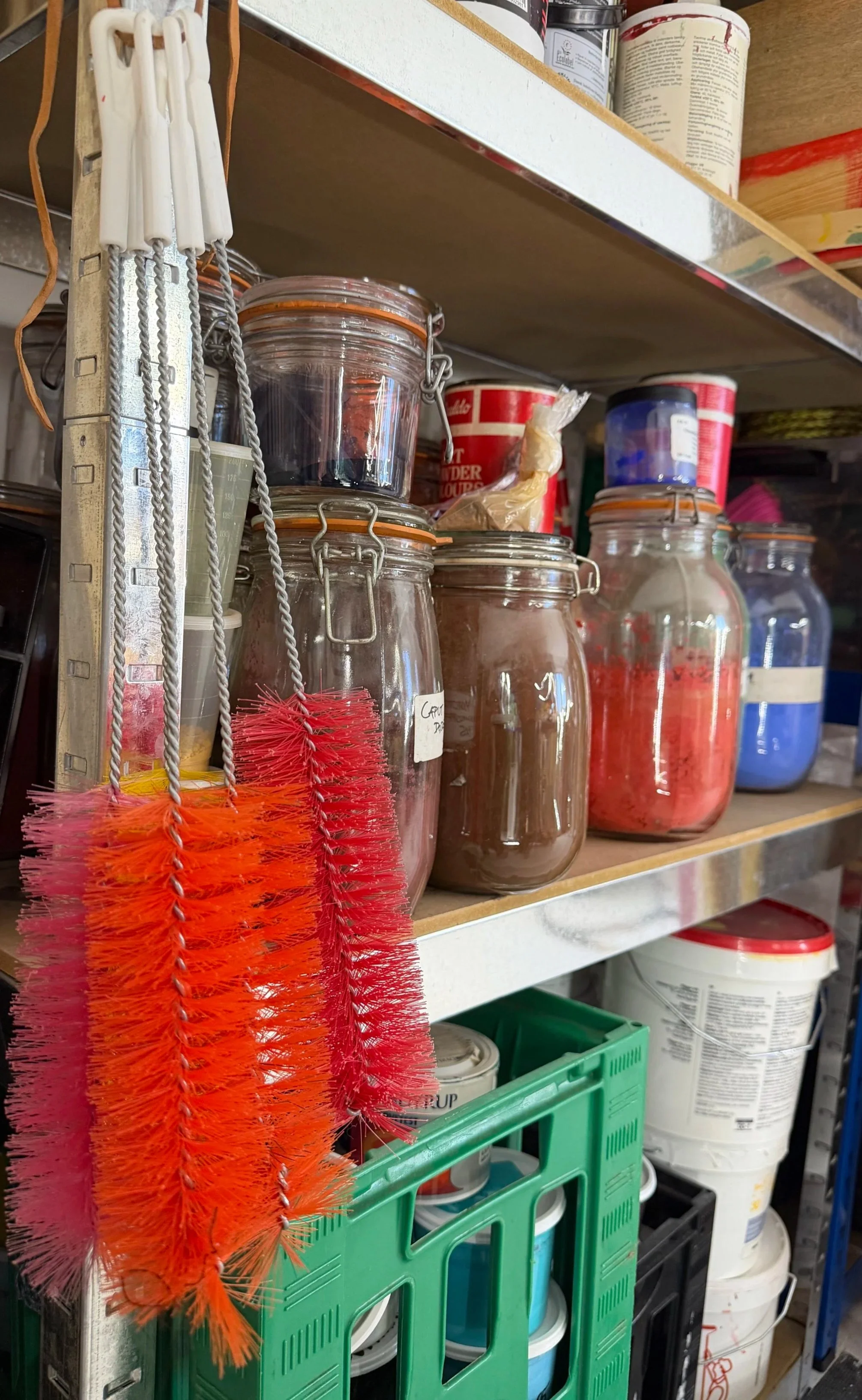
Bottle brushes from Paris, 2026
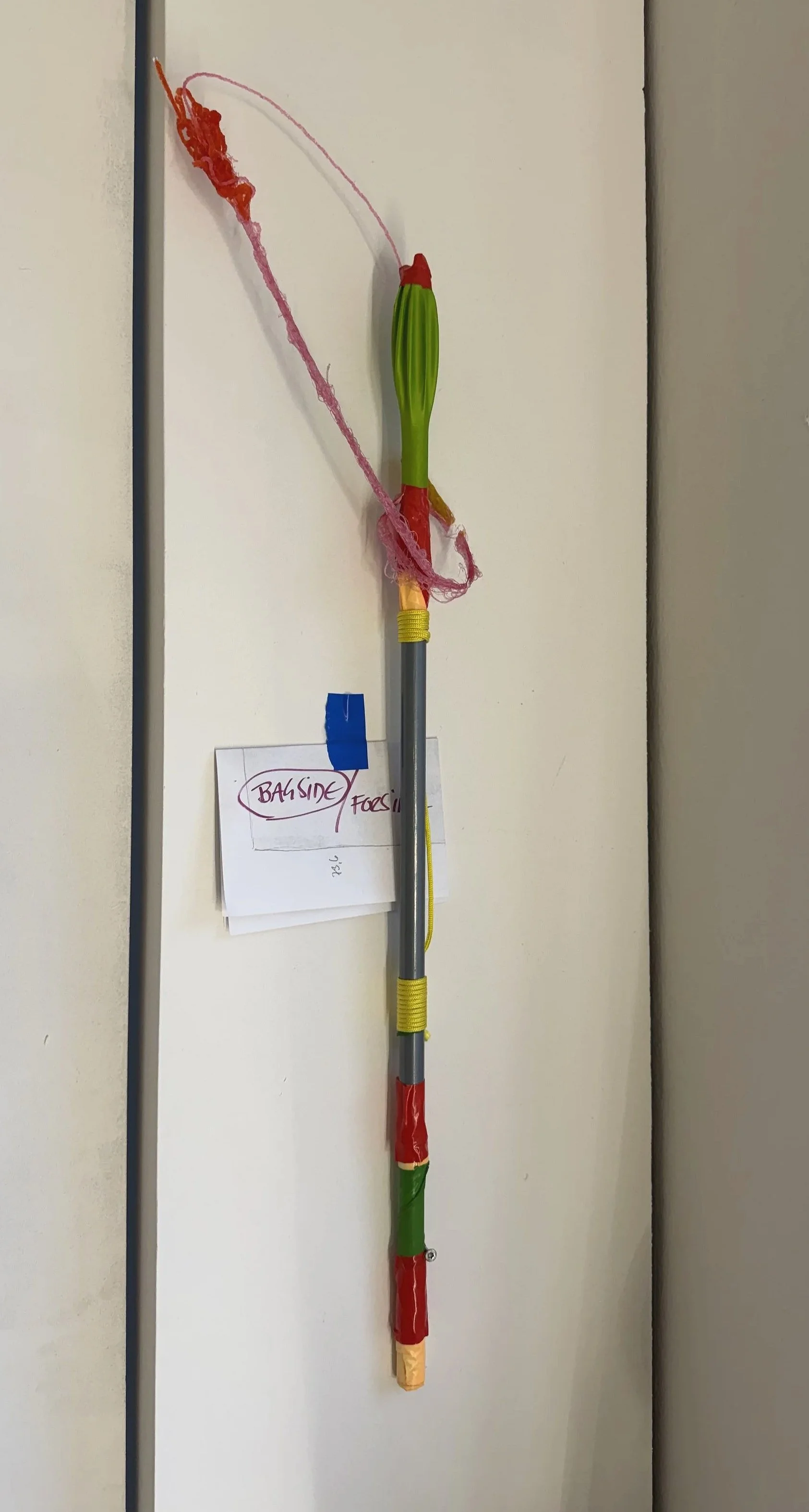
A brutally honest stick
“I asked Artists Little Helper whether it should be the back or the front that faces outward,” she tells me, referring to a tufted work depicting a section of a neighbourhood in New York. Artists Little Helper is a plastic stick, clad with tape, string, and epoxy castings.
“And what did it say?” I ask curiously.
“It says the back should face outwards,” Svendsen conveys.
Artists Little Helper is the instrument every artist ought to have in their studio: a dialogue stick, with supernatural powers and skinless opinions, capable of stripping the most exalted internal discussions down to the bone.
Artists Little Helper, 2026
If one listens, the objects begin to speak. Not loudly, but insistently.
“If I could take only one thing with me to a desert island, it would be my orange clamp,” she says. As if it were a lifeline. As if it were a memory. In Svendsen’s hands nothing is neutral. Transparent plastic cans filled with yellow cleaning liquid, transported all the way from The Hague, a black glasses-cleaning cloth, fished from the pocket and tossed down in front of an artwork in the middle of a conversation about whether the piece is finished. Things carry weight. They carry will.
I truly fell in love with Svendsen’s universe years ago at a solo exhibition where pharmaceutical signs, tuft, and found objects melted together into a colour-saturated Mindmap. While my academic head analysed, she pulled the rug out from under me.
“For me they’re just forms. I’m not a word person, but I saw, the colour and the figure fit together.”
So simple. So radical.
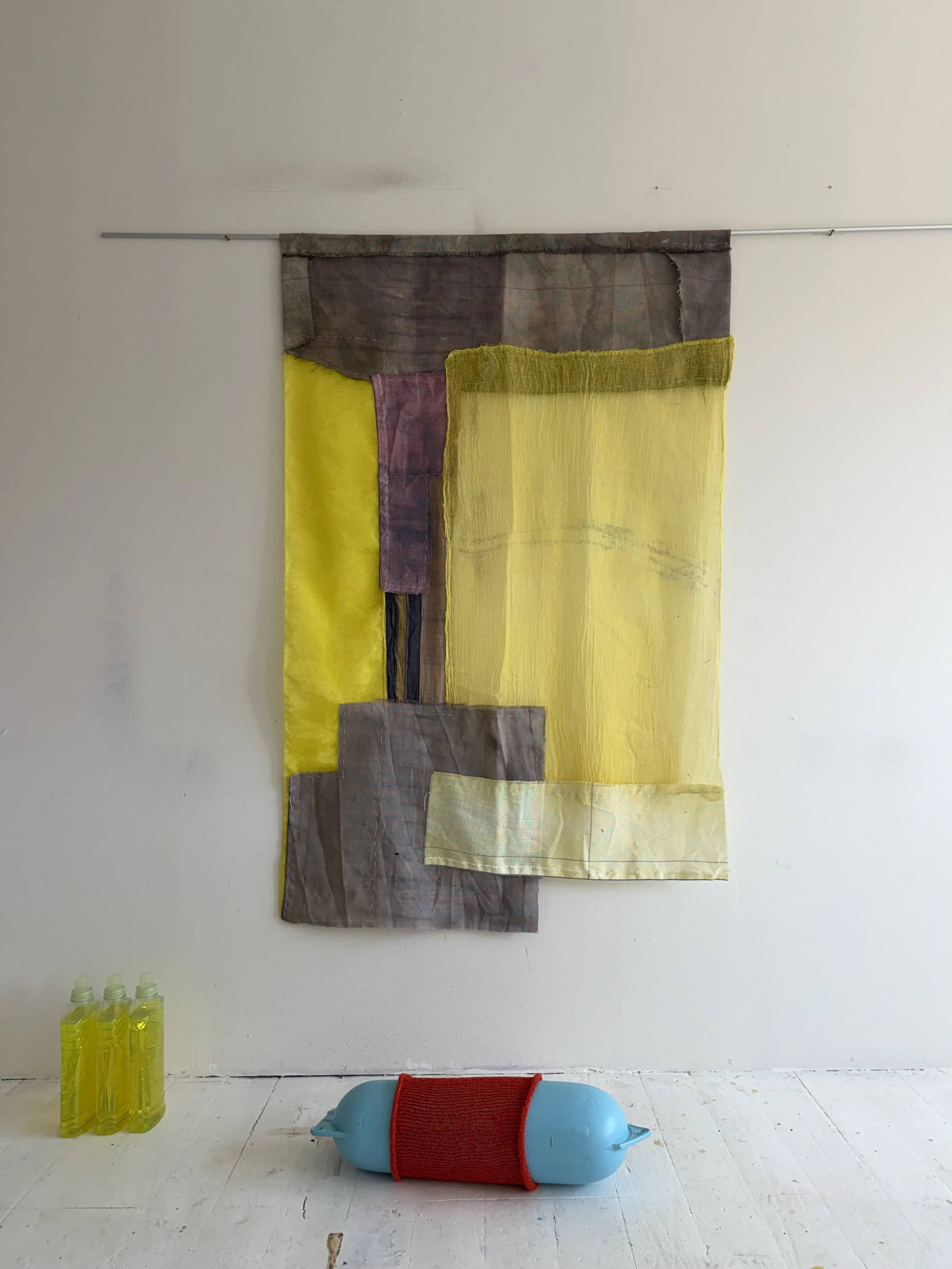
Various objects, 2026
A changed gaze
Here, an artist works according to the rule: I may use everything, I may do everything. It is a generous rule. And infinitely releasing.
We need the humour, the unpretentiousness, and the warmth. The gaze that sees possibilities in backyards and containers, gathering them into enveloping works only Svendsen masters.
Hours later I cycle home in the rain. A blue packet of handkerchiefs falls from my jacket pocket and lands in a puddle. I pick it up and place it in the basket, listening to the rattle of the bicycle through the city, observing the handkerchiefs’ new clumped form.
Something has shifted. Perhaps Svendsen has changed my view of materialism forever.
I am grateful for the lesson.
We all should be.