
“I do not follow rules, I create my own”
- Nina K. EkmanHealing, magnificent and liberatingly humorous. Meet visual artist Nina K. Ekman, a poetic ambassador of wild nature.
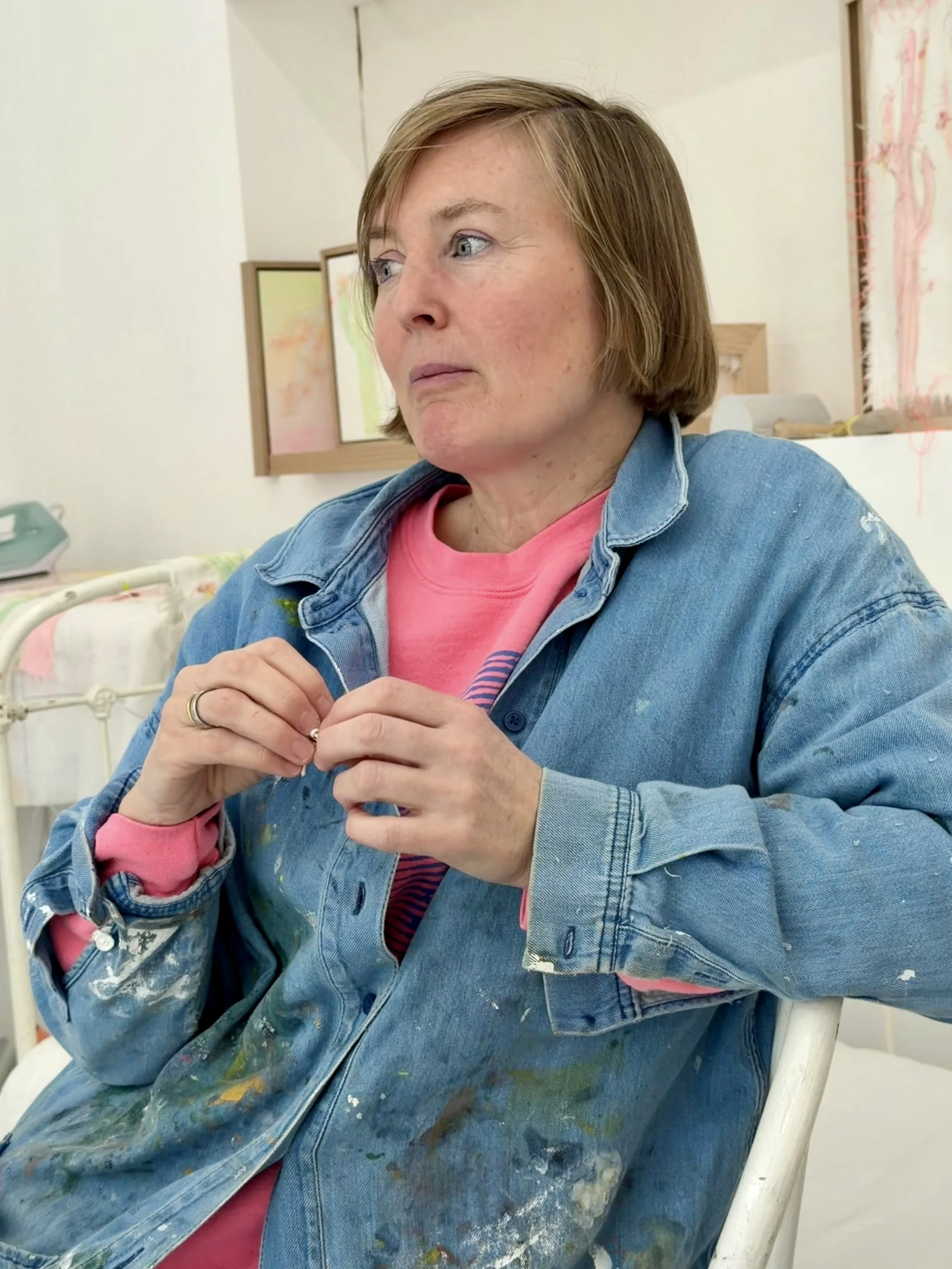
Ekman repeats: she is not saintly, but a little moral. Her project is not to preach, but to awaken. And perhaps it is precisely in that moment when the light returns, and the birch stands radiant in its tender green, that her message emerges most clearly: Nature is the most beautiful thing we will ever be allowed to borrow.
“My mother received, a year ago, my earliest drawings and weavings from kindergarten - imagine that they have been preserved,” Ekman recounts with a smile tinged with wonder. It seems almost inevitable: for her artistic expression, shaped after a lifetime spent exploring many recesses of art, is very unique.
As a child, she dug clay from the earth and shaped it with her hands; she built sculptures long before she had language for them. At twelve, she received her first oil painting set from her grandmother, a gesture that proved decisive. Painting still accompanies her, though today it serves more as a preliminary exercise, a warm-up, before the works find their true form.
artSIStra interview // Henriette Hellstern // Mar. 19. 2026 // Frederiksberg // Denmark
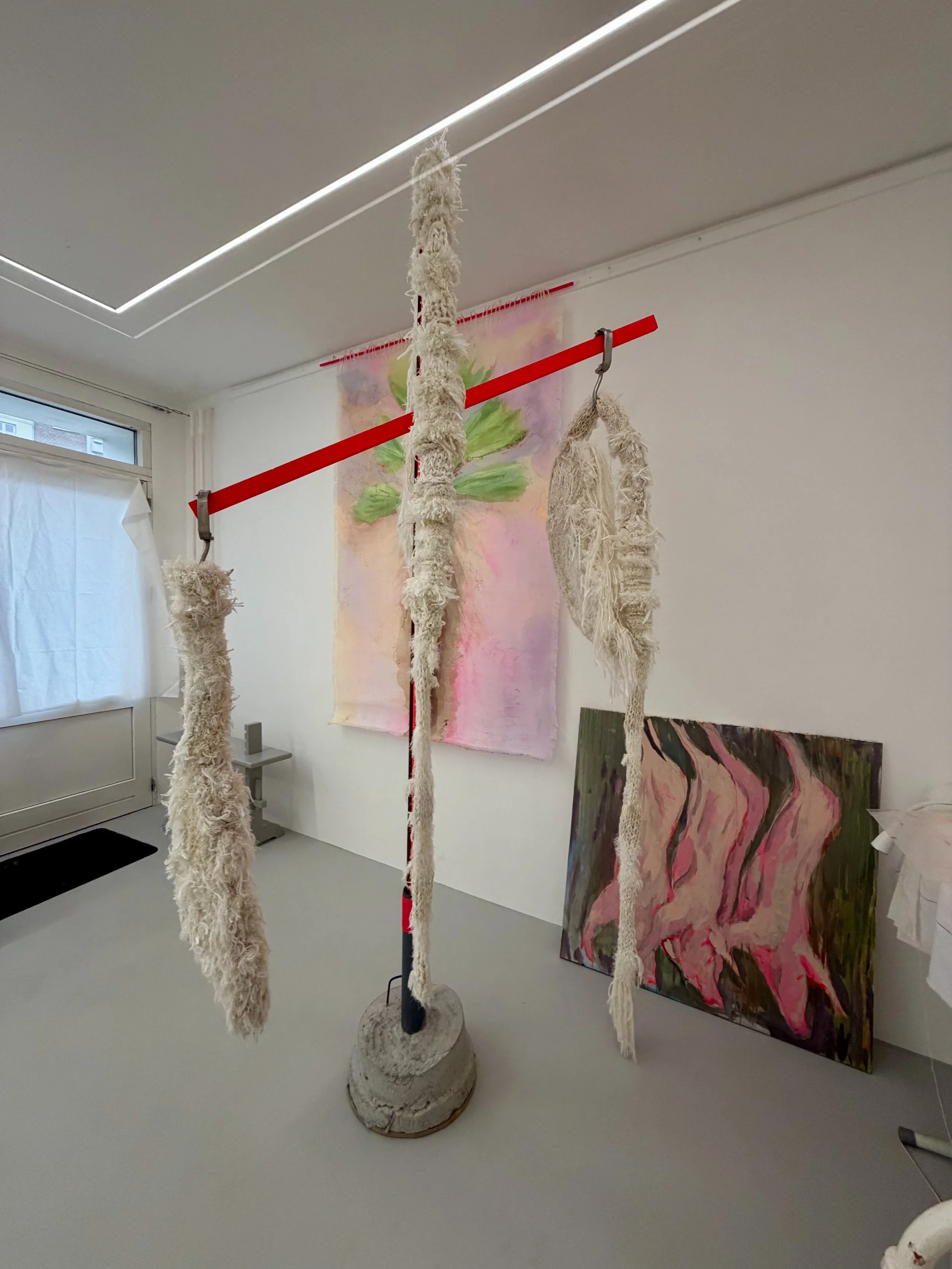
Various objects, 2026
The persistent, insistent artist
In her studio in Frederiksberg, situated at street level along a heavily trafficked road where the ceaseless flow of cars imposes an insistent rhythm, another tempo unfolds indoors. Here works an artist committed to an ethic of slowness: stoic, concentrated, with an almost meditative discipline. Ekman’s works, often human in scale, wind through the space like organic presences. They are the result of months, sometimes half a year, of repetitive movement and a persistent, loving insistence on the labor of the hand.
Her background spans widely: studies at Parsons in Paris, educated clinical psychologist, and a practice rooted in mindfulness and meditation. These experiences materialize in the tactile sensitivity of her works and in their quiet yet enduring appeal to presence. At the same time, her aesthetic carries an unexpected echo of 1990s fluorescent hues, vibrating against soft, fur-like surfaces in chalk white and light green.
After having lived in thirty different places, Ekman now experiences a form of rootedness in Copenhagen, surrounded by her birch trees, palms, and cacti. She originally hails from Finnsnes in Northern Norway, where winter darkness can endure for months, and where the northern lights move like a silent drama across painted houses. It is from here that her deep connection to nature seems to arise, a connection that, in her practice, becomes both poetic and political.
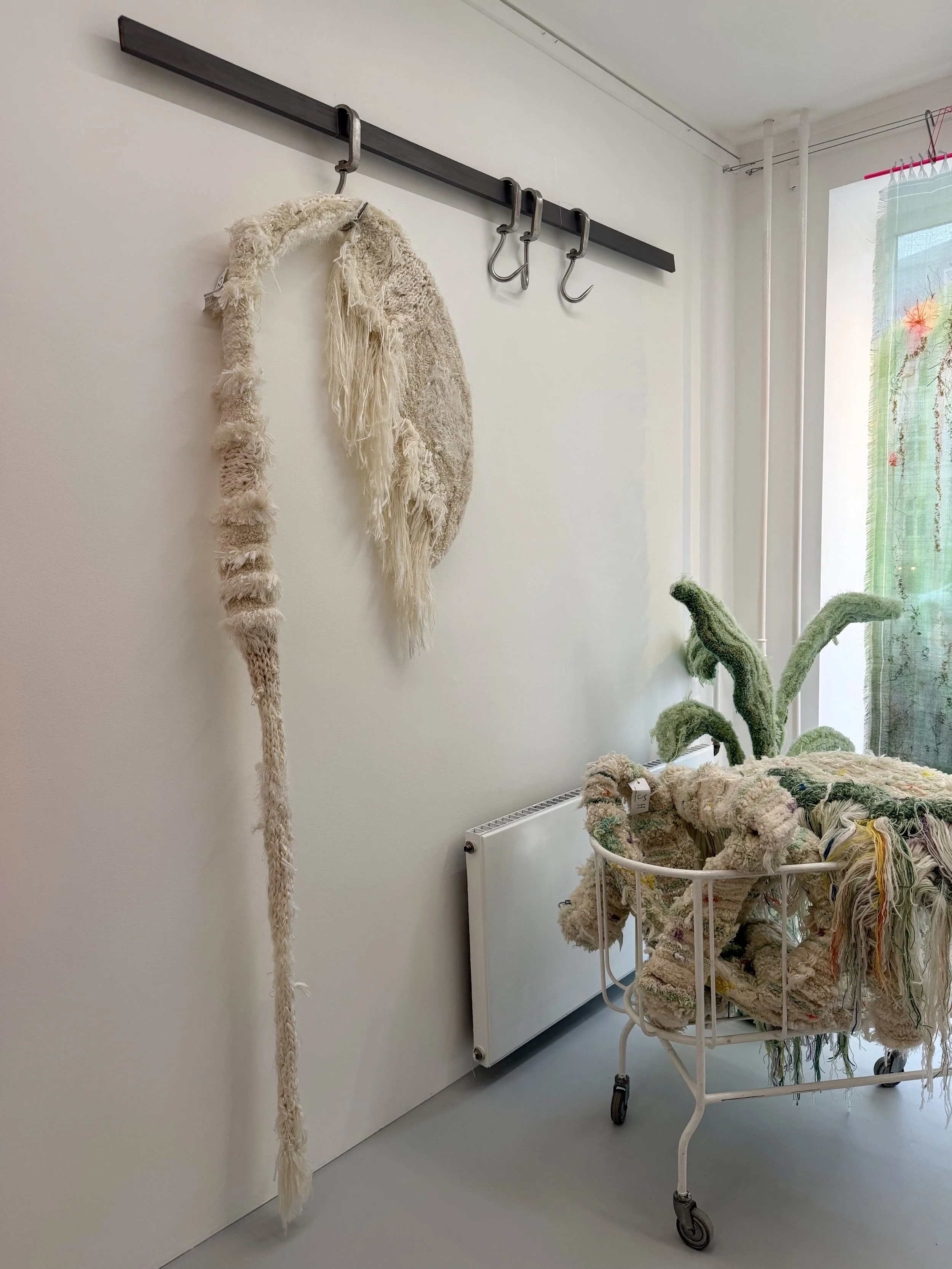
Palm tree experiments, 2026
Botanical slaughterhouses
“These are botanical slaughterhouses I work with,” she says matter-of-factly, as the conversation turns to the relationship between untouched forests in Norway and those in Denmark. She seeks to elevate nature, to restore it to a kind of dignity upon a pedestal: “The trees are our kings and queens,” she says in a manner that leaves me only able to nod in assent.
This double movement, between the exalted and the destructive, reappears in her current preoccupation with industrial slaughterhouses. Her mood boards reveal diverse sources of inspiration: totem poles, carcasses, rapid sketches of contorted beings. The conversation drifts toward the story of Mao and the campaign against the sparrows in 1958, a tragic account of humanity’s attempt to control nature, ultimately resulting in ecological collapse, famine, and death.
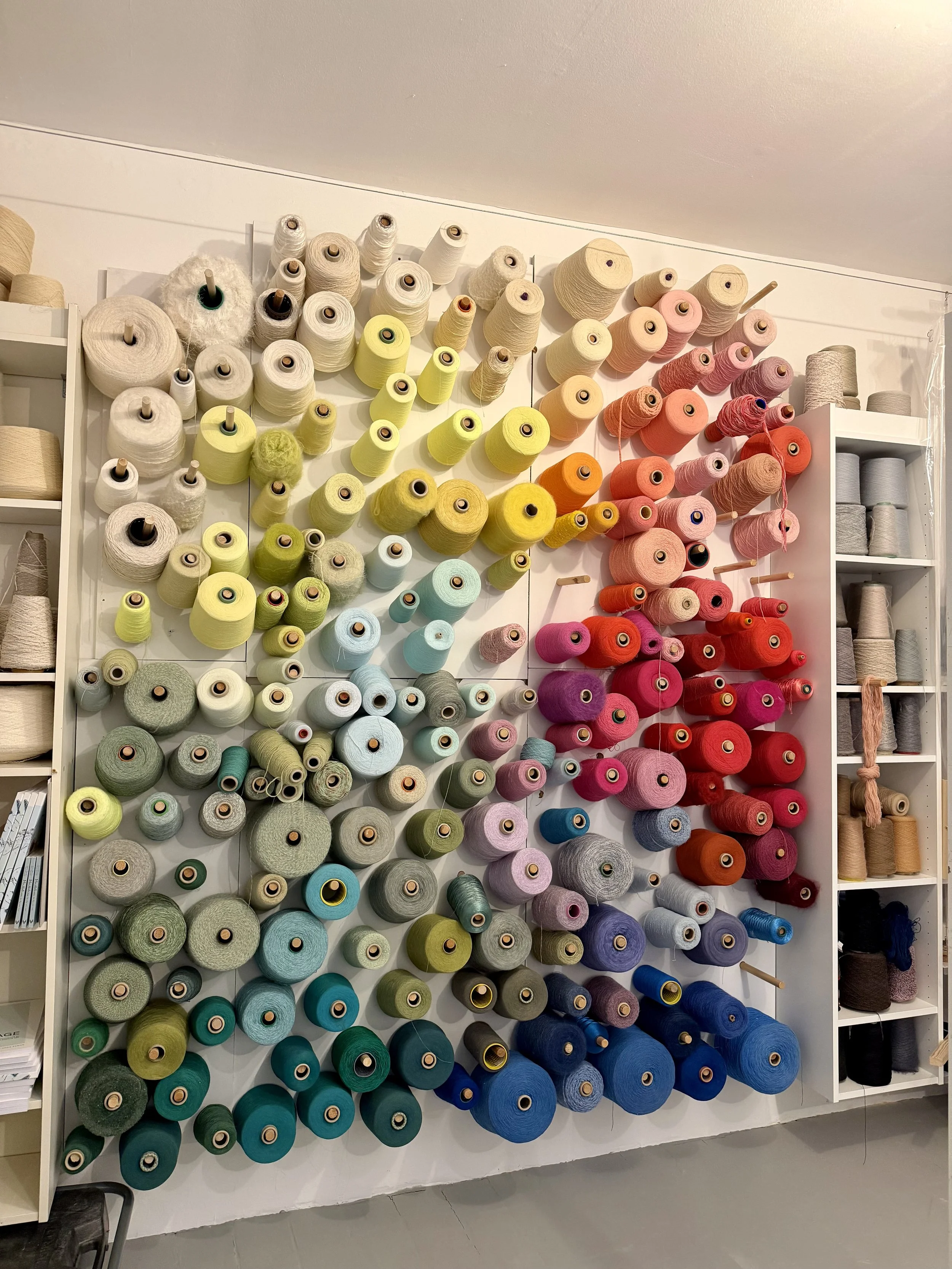
The Yarn Wall, 2026
The meeting with tufting
Yet humor is never absent in Ekman’s universe. It resides in the surprising juxtapositions of materials, in the boldness of color, in the quiet irony of the works. Tufting became part of her practice in 2018, as a bodily response to the forest fires in Sweden and Norway. A desire to stitch, to connect, to repair emerged as her father lay dying. The process was long and marked by experimentation before she found her own method. “I do not follow rules, I create my own,” she states.
Nevertheless, an ethical consistency runs through her practice: an ongoing commitment to reuse and responsibility. At one point, she wore only ten percent of her wardrobe, in order to experience how sustainable choices are felt in the body. For her, action is essential: a concrete, sensuous practice rather than abstract intention.
We need to wake up
Ekman repeats: she is not saintly, but a little moral. Her project is not to preach, but to awaken. And perhaps it is precisely in that moment when the light returns, and the birch stands radiant in its tender green, that her message emerges most clearly: Nature is the most beautiful thing we will ever be allowed to borrow.
“We must think less and do more,” she says with a calm that seems to permeate both space and work. In her art, we encounter a practice that addresses the greatest climatic questions with a fine, persistent sensibility. And in the moment we surrender to a true work by Ekman, we enter, perhaps irreversibly, into her quiet, insistent mission.
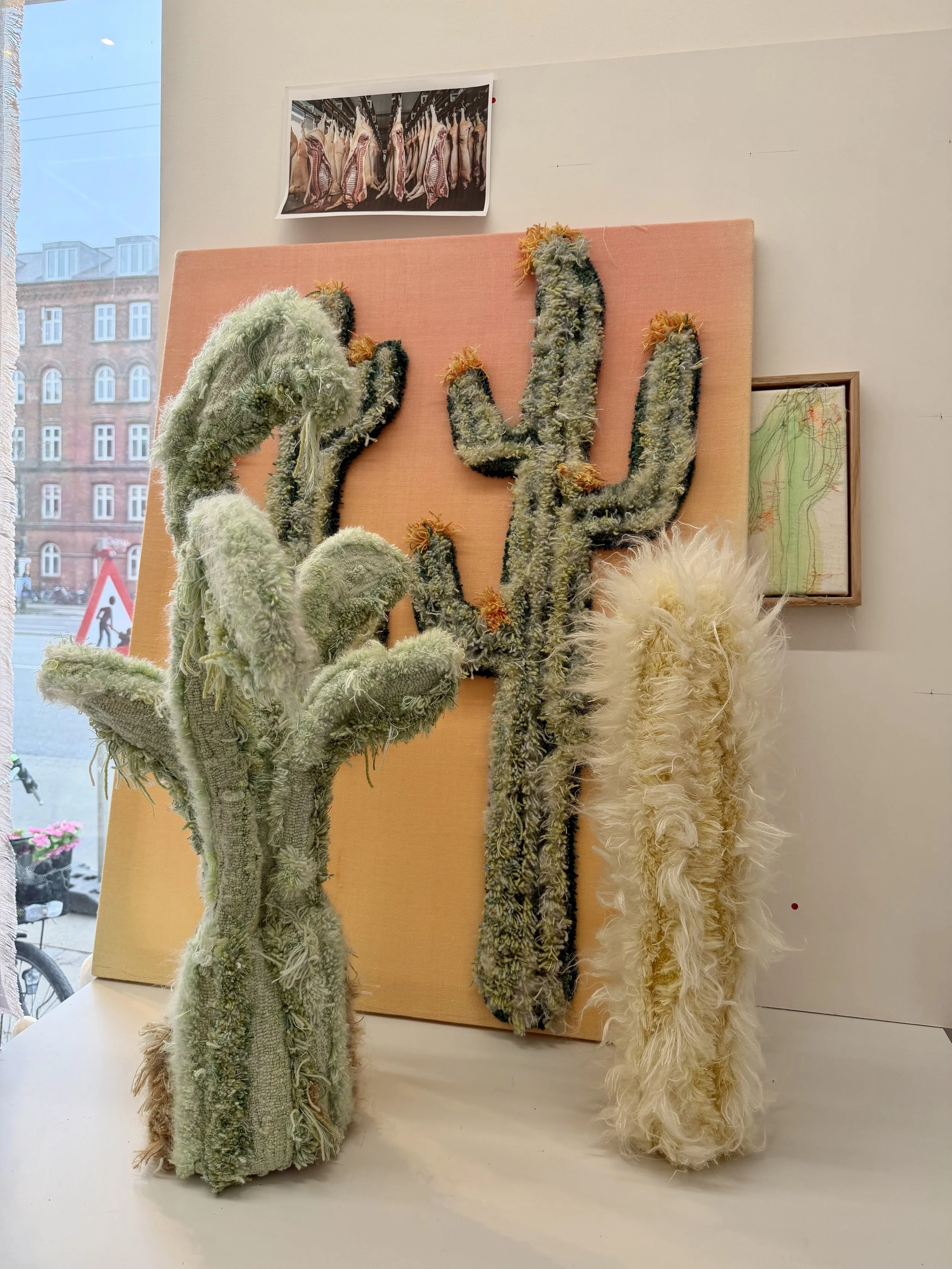
Cactus and slaughterhouse combo, 2026
Healende, storslået og befriende humoristisk. Mød billedkunstner Nina K. Ekman, en poetisk ambassadør for den vilde natur.
artSIStra interview // Henriette Hellstern // Mar. 19. 2026 // Frederiksberg // Danmark
Ekman gentager: hun er ikke hellig, men lidt moralsk. Hendes projekt er ikke at prædike, men at vække. Og måske er det netop i det øjeblik, hvor lyset vender tilbage, og birken står og lyser i sin spæde grønhed, at hendes budskab træder klarest frem: Naturen er det smukkeste, vi nogensinde får lov at låne.
“Min mor modtog for et år siden mine tidligste tegninger og vævninger fra børnehaven - tænk, at de er blevet bevaret,” fortæller Ekman med et smil præget af undren. Det synes næsten uundgåeligt: for hendes kunstneriske udtryk, som hun har fremkaldt efter at have beskæftiget sig med mange afkroge af kunsten hele livet, er ganske særligt.
Som barn gravede hun ler op af jorden og formede det med hænderne; hun byggede skulpturer længe før hun havde et sprog for dem. Som tolvårig modtog hun sit første oliemalersæt af sin Mormor, en gestus, der blev skelsættende. Maleriet ledsager hende stadig, men fungerer i dag snarere som en indledende øvelse, en opvarmning, før værkerne finder deres egentlige form.
Den vedholdende insisterende kunstner
I hendes atelier på Frederiksberg, placeret i stueetagen ud mod en tæt trafikeret vej, hvor bilernes konstante strøm danner en insisterende rytme, udfolder der sig et andet tempo indendørs. Her arbejder en kunstner i en langsomhedens etik: stoisk, koncentreret, med en næsten meditativ disciplin. Ekmans værker, ofte i menneskestørrelse, snor sig gennem rummet som organiske tilstedeværelser. De er resultatet af måneder, undertiden halve år, med repetitive bevægelser og en vedholdende, kærlig insisteren på håndens arbejde.
Hendes baggrund spænder vidt: studier ved Parsons i Paris, en uddannelse som klinisk psykolog samt en praksis forankret i mindfulness og meditation. Disse erfaringer materialiserer sig i værkernes taktile sensibilitet og deres stille, men vedvarende appel til nærvær. Samtidig rummer hendes æstetik en uventet reference til 1990’ernes fluorescerende farver, der vibrerer mod bløde, pelsede overflader i kridhvidt og lysegrønt.
Efter at have levet tredive forskellige steder oplever Ekman nu en form for rodfæstelse i København, omgivet af sine birketræer, palmer og kaktusser. Oprindeligt stammer hun fra Finnsnes i Nordnorge, hvor vinterens mørke kan vare i måneder, og hvor nordlyset bevæger sig som et tavst drama over de farvede huse. Det er herfra, hendes dybe forbundethed med naturen synes at udspringe, en forbundethed, der i hendes praksis bliver både poetisk og politisk.
Botaniske slagterier
“Det er botaniske slagterier, jeg arbejder med,” siger hun nøgternt, idet samtalen drejer mod forholdet mellem uberørt skov i Norge og Danmark. Hun søger at ophøje naturen, at genindsætte den i en form for værdighed op på en piedestal: “Træerne er vores konger og dronninger”, siger hun på en måde så jeg kun kan nikke ja.
Denne dobbelte bevægelse, mellem det ophøjede og det destruktive, genfindes i hendes aktuelle optagethed af industrielle slagterier. Hendes mood boards vidner om diverse inspirationskilder: totempæle, kadavre, hastige skitser af forvredne væsner. Samtalen glider videre til historien om Mao og kampagnen mod spurvene i 1958, en tragisk fortælling om menneskets forsøg på at kontrollere naturen, der i sidste ende resulterede i økologisk kollaps, hungersnød og død.
Mødet med tufting
Alligevel er humoren aldrig fraværende i Ekmans univers. Den findes i materialernes overraskende sammensætninger, i farvernes dristighed, i værkernes stille ironi. Tufting blev en del af hendes praksis i 2018, som en kropslig respons på skovbrandene i Sverige og Norge. En trang til at sy, at forbinde, at reparere spirede frem mens hendes far lå for døden. Processen var lang og præget af eksperimenter, før hun fandt sin egen metode. “Jeg følger ikke regler; jeg skaber mine egne,” fastslår hun.
Dog eksisterer der en etisk konsekvens i hendes praksis: en vedvarende bestræbelse på genanvendelse og ansvarlighed. På et tidspunkt brugte hun kun ti procent af hendes garderobe, for at erfare, hvordan bæredygtige valg mærkes i kroppen. For hende er handling afgørende: en konkret, sanselig praksis frem for abstrakt intention.
Vi skal vækkes
Ekman gentager: hun er ikke hellig, men lidt moralsk. Hendes projekt er ikke at prædike, men at vække. Og måske er det netop i det øjeblik, hvor lyset vender tilbage, og birken står og lyser i sin spæde grønhed, at hendes budskab træder klarest frem: Naturen er det smukkeste, vi nogensinde får lov at låne.
“Vi må tænke mindre og gøre mere,” siger hun med en ro, der synes at gennemtrænge både rum og værk. I hendes kunst møder vi en praksis, der adresserer de største klimatiske spørgsmål, med en fin, vedholdende sensibilitet. Og i det øjeblik, vi overgiver os til et ægte værk af Ekman, indtræder vi, måske uigenkaldeligt, i hendes stille, insisterende mission.